The new towns springing up along the railroads all wrote letters to the editor of the Iowa Daily State Register and Waukee was not exception. All of these towns needed people to come and settle, so their letters were very flowery and enticing. This paper probably sent their dailies far and wide to promote our state. They urged their patrons to send copies to relatives and friends to promote the settling of out fair land.
In Waukee’s first letter to the editor of September 18, 1869, we find glowing accounts of growth and prosperity. Only a few weeks ago it was all flowers, grass and views, now there were dwellings, stores and business:
C. D. Cramer had a first class lumber yard
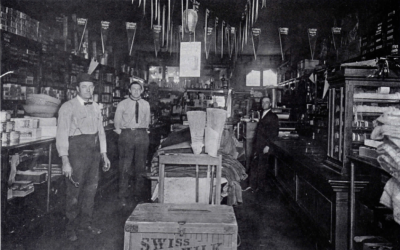
W. J. Johnson kept the pioneer store
C. B. Snow and Bro. were erecting a substantial building for another grocery store
D. M. Calvert is opening a dry goods store, while waiting for his building to beerected, he was to occupy Mr. Parker’s new store.
Mr. Parker was one of the many carpenters who came to settle here. His daughter, Minnie, has the honor of being the first child born in Waukee.
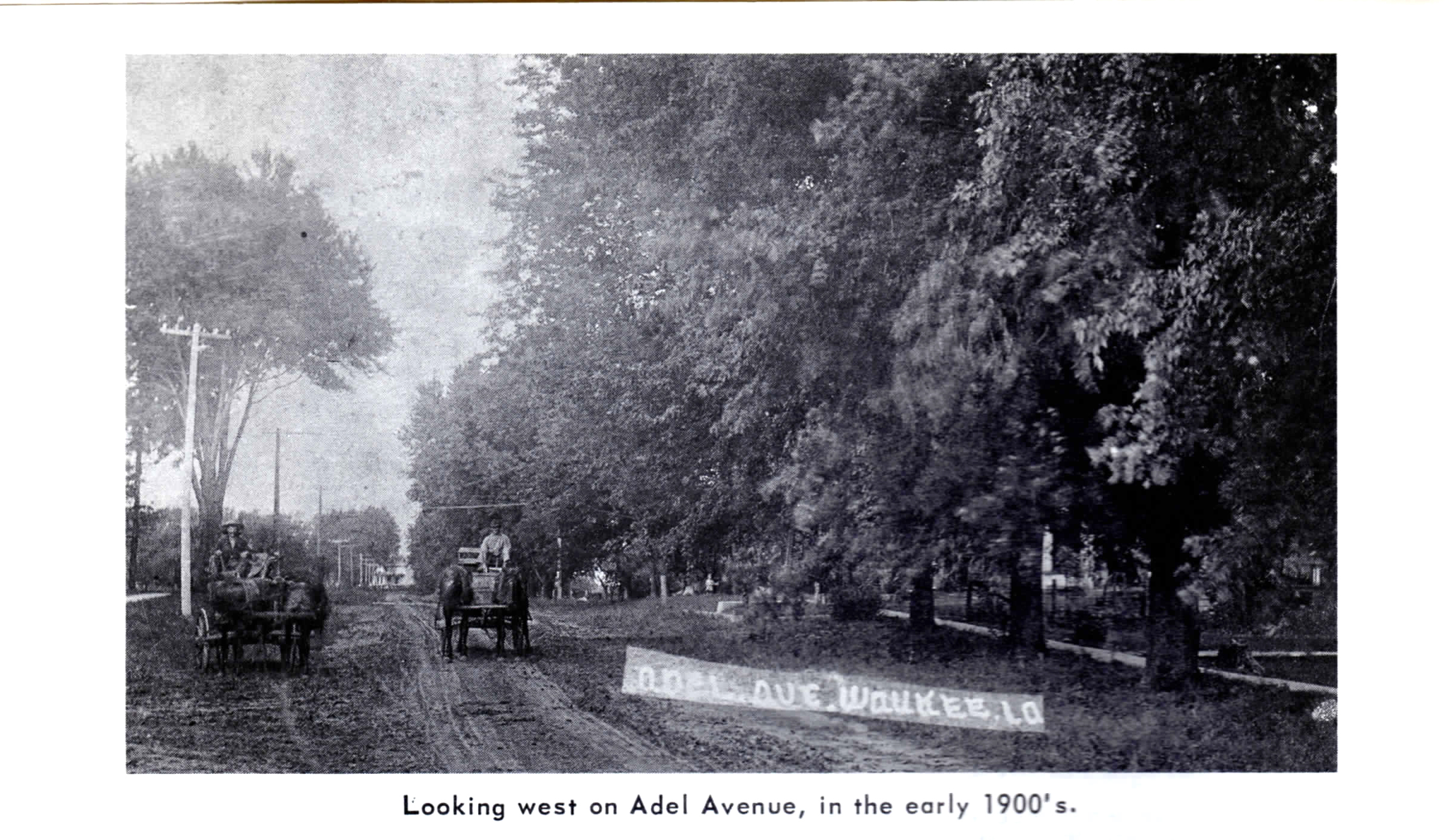
Mr. Ashton has commenced his livery stable, already owning the freighting business that ran between Waukee and Adel.
Mr. Whitmore, brother of the station agent was ready to open a coal yard.
C.C. Tyler had proposed to open an elevator and grain warehouse.
At this time Waukee was looking forward to becoming a junction and had hopes of a round house and railroad work shop.
An important note of progress was a daily mail route established between Waukee and Adel in November of 1869. This new route would allow Adel to get their morning mail and papers six hours earlier than ever before. Their mail had previously come through DeSoto.
Our next letter from Waukee appears in July, 1870. An inviting, wordy letter which promises good living and prosperity to those who would settle in the area. The business houses listed were: lumber, Cramer Bros.; dry goods, D.M. Calvert; drug store, C.F.M. Clarke; hardware, Ames and Bullock; grocery and queensware, G.A. Curtis; grocery and grain, A.J. Snow.
T.D. Fuller had opened a new hotel to be called “Waukee House” and Tyler and Son were erecting an elevator which would have a capacity of 10,000 bushels of grain to be ready for the year’s harvest. (This was erected east of the depot and south of the spur line.) Besides these, there was a blacksmith shop, harness shop and livery stable. James Jennings was the station agent and William Campbell the telegrapher.
Here also we find reference to several hundred dollars expended to drain the ponds or “dimples” of the town, one was left however to supply the water tank. This pond was just east f Fourth Street and north of the railroad tracks. (over the years the young people spent many enjoyable hours ice skating here during the winter time.)
Among the buildings going up at this time was the Presbyterian Church, the limestone used for the foundation coming from a quarry along Sugar Creek south of town. This limestone was also used for the foundations of the elevator and Mr. Jennings’ home.
From the letter, we get the feeling that Waukee was to be an important shipping point for grain and would have a bright future.